Weekend links 830

hilscher.jpg

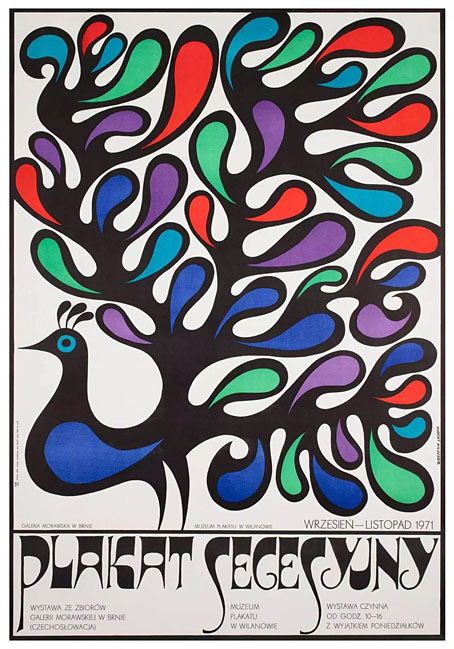
Plakat Secesyjny (1971), a poster by Hubert Hilscher for an exhibition of Art Nouveau graphics.

• At Public Domain Review: Longitude by Way of Wounded Hounds: Kenelm Digby’s Sympathetick Powder (1669 edition). Two subjects familiar to readers of Thomas Pynchon’s Mason & Dixon.

Miles Davis and group (Dave Liebman, Pete Cosey, Reggie Lucas, Michael Henderson, Al Foster, James Mtume) live in Stockholm in 1973. TV footage, 56 minutes.

• At the BFI: Rory Doherty selects ten great films about forgers and fakes, while Kazuo Ishiguro compiles a list of his top ten train films.

• At Colossal: “Markus Brunetti’s monumental photos venerate European ecclesiastical landmarks”.

• Font Faces: Nick Shinn answers questions about being a type designer.

• Mix of the week: DreamScenes – May 2026 at Ambientblog.

Milky Way photographer of the year 2026.

• New music: Chambers by Ruben.

Train To Ranchipur (1959) by The Markko Polo Adventurers | One Train Load Of Dub (1974) by Tommy McCook & The Observers | Sunstroke / Mind Train (1992) by Sun Dial

The Sound of Claudia Schiffer

socs1.jpg

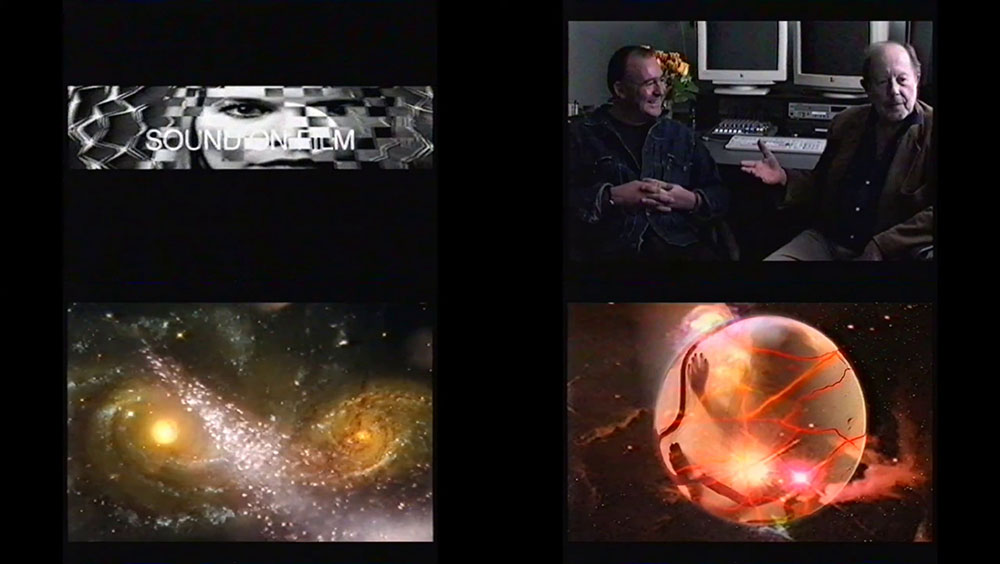
A minor entry in the Nicolas Roeg filmography that few people will have seen. In March 2001 the BBC broadcast four 15-minute films that the corporation had commissioned for an occasional arts strand, Sound on Film. Each episode featured a new piece of music by a living composer, with visual accompaniment by four very different directors. Pilgrimage was directed by Werner Herzog with music by John Taverner; The New Math was directed by Hal Hartley with music by Louis Andriessen; In Absentia was directed by the Quay Brothers with music by Karlheinz Stockhausen.

socs2.jpg

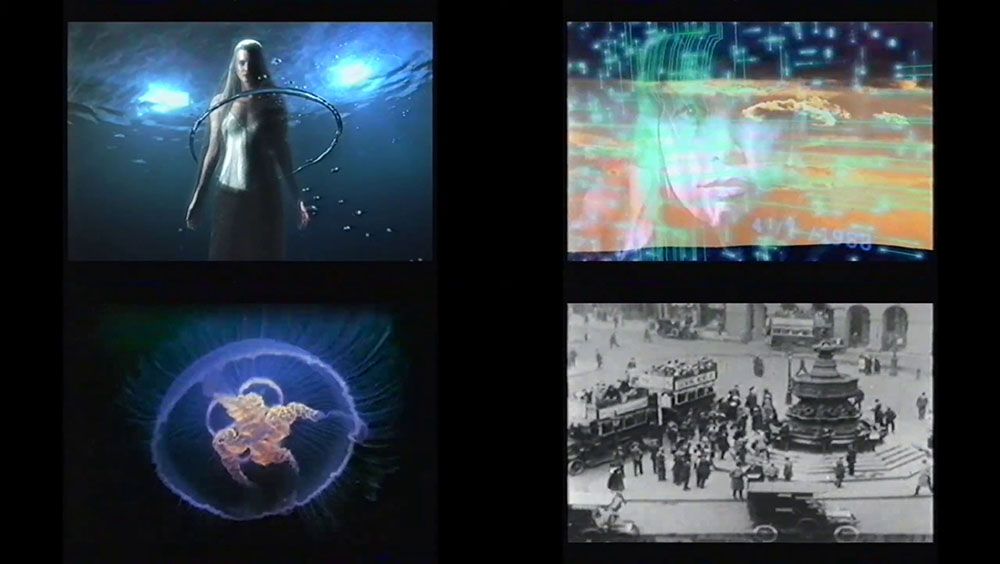
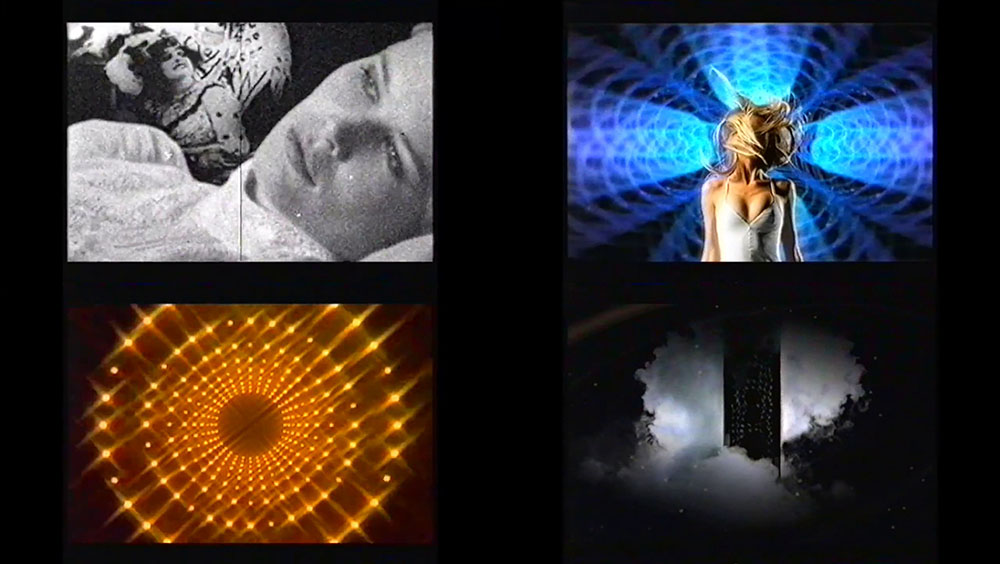
The second film in the series, The Sound of Claudia Schiffer had music by Adrian Utley, the guitarist/synth player in Portishead, with visuals by Nicolas Roeg. I can imagine many people bristling at Utley being described as a composer in a list that includes Stockhausen and Taverner—he may well dispute the term himself—but being the owner of many Portishead records I was happy enough with the pairing. I wasn’t so happy with the film, however, which seemed like an incoherent reprise of the more cosmic moments from Roeg’s earlier films combined with found footage and computer effects that were clunky at the time and look distinctly antiquated 25 years later. The BBC’s listing described The Sound of Claudia Schiffer as a film that “contemplates the nature of celebrity and memory, and how vision can be affected by sound”. In the short introduction Roeg admits to being unsure what any of it meant at all.

socs3.jpg

Watching the piece again I still don’t think it’s very good but it does reinforce my view of Roeg as the most cosmically aware of British directors, especially among the resolutely parochial crowd (Ken Russell excepted) who were his contemporaries. “Cosmic” in this sense is a quality that can easily devolve into vague mysticism or New Age kitsch but at his best Roeg was always looking beyond the immediate confines of space and time, whatever his films might be concerned with at the story level. You see this in his persistent cross-cutting, where visual and thematic rhymes turn everyday life into a web of intricate connections which his characters fail to notice. And his films are often cosmic in a stellar sense; watching Eureka again I was struck this time by the way the film opens with a shot of a pool of gold-infused water whose surface resembles a cloudscape over the sea as observed by an orbiting satellite. The shot which follows—only the second image in the film—is a view of the Earth from space, something which the film’s characters (in 1925 and 1945) could never see for themselves. The Sound of Claudia Schiffer goes overboard with this expansive tendency, turning the model’s narrated biography into something more suited to a description of a visitor from another planet.

Of the other films in this series, the Hartley/Andriessen doesn’t seem to be on YouTube but the Herzog/Taverner may be seen here. In Absentia has been available for many years now on the Quay Brothers’ DVD and blu-ray collections.

Previously on { feuilleton }
Roeg abroad
Landscape with the Fall of Icarus
The Nicolas Roeg Guardian Lecture, 1983
Beyond the Fragile Geometry of Space
Canal view

Roeg abroad

roeg01.jpg

Japan, 1998.

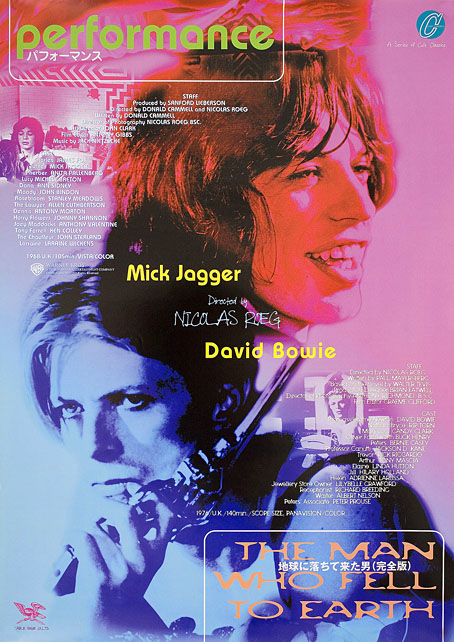
I’m currently in the middle of a Nicolas Roeg rewatch season after acquiring a blu-ray of the recently reissued Castaway, Roeg’s 1986 adaptation of Lucy Irvine’s memoir (which shouldn’t be confused with 2000’s Cast Away). In the early 1980s when I was becoming more acquainted with his films I went through a phase of buying film posters, and managed to pick up copies of the UK quad sheets for Don’t Look Now and Bad Timing. I would have preferred the one for The Man Who Fell to Earth but Bowie-obsessives have made that particular item very collectible, and it never crossed my path. Foreign posters for Roeg films also tend to be uncommon since his films have never been really popular, and some, like Eureka, were plagued with distribution difficulties which made them difficult to see at all. Eureka is missing from this small collection of foreign posters due to a lack of suitable candidates.


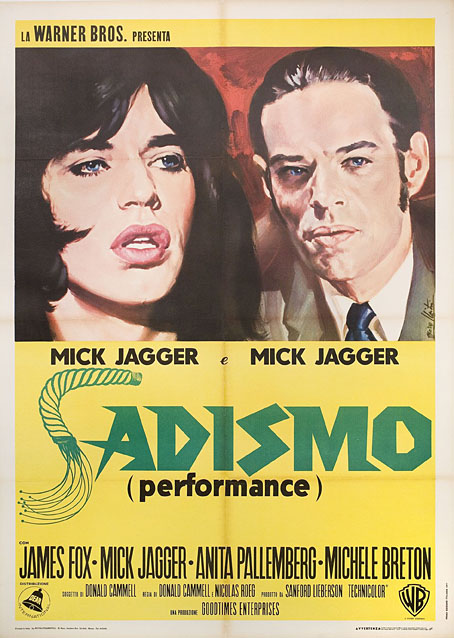
Performance
roeg02.jpg

Italy, 1971.

One thing you notice when you look for details of foreign releases is how often a film title is changed to suit local tastes. The Italians changing Performance to Sadismo is one of the more ridiculous examples, picking out a minor detail—Joey’s whipping of Chas at the beginning of the film—while ignoring the rest of the film’s kaleidoscope of images and references.


Walkabout
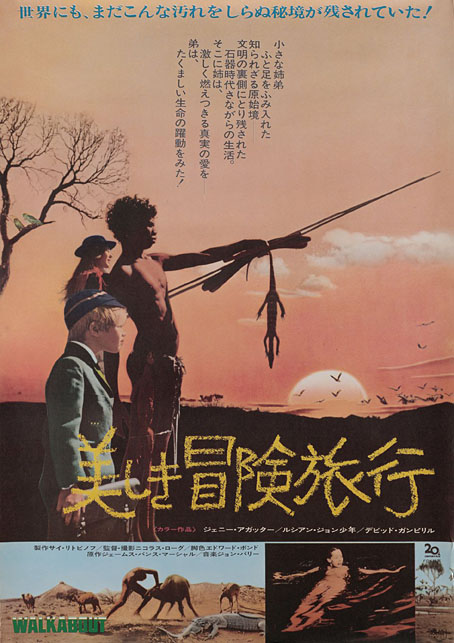
roeg03.jpg

Japan, 1971.

Similar changes occur in poster art, when the movement to another country prompts the local designers to over-emphasise a film’s sensational elements. In the UK and US the posters for Walkabout stressed the story as being one about survival in a wilderness, and the differences between the Indigenous boy and the English girl and her brother. Elsewhere the posters were more concerned with Jenny Agutter’s skinny-dipping scene while telling you little else about the rest of the film.


Don’t Look Now
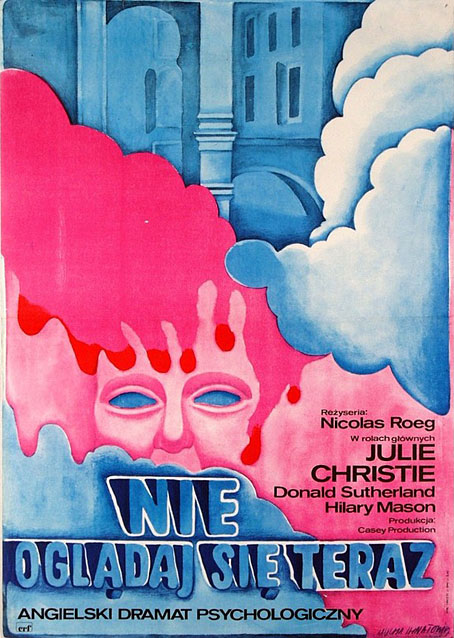
roeg04.jpg

Poland, 1973. Art by Maria Mucha Ihnatowicz.

I was hoping there might be more Polish posters for Roeg’s films but this was the only one which turned up. Japanese posters can at times be as elusive as the celebrated Polish designs, with an approach to design that’s very different to the Western standard. The Japanese poster for a reissue of Don’t Look Now is one of the best I’ve seen for that particular film, condensing into a single image the two threads of the story—the dead girl and the murder mystery—while emphasising the film’s persistent use of the colour red.

roeg05.jpg

Japan, 1983.

Continue reading “Roeg abroad”
Weekend links 829

hoffmeister.jpg

In the Constellation of Pisces by Adolf Hoffmeister.

• “Comb through many of the numerous ‘greatest post-punk albums of all time’ lists that you’ll find dotted around the internet and one fairly continual omission is Thirst, which is something of a travesty. It’s difficult to think of many albums that embody the more pioneering and progressive elements of the post-punk spirit than Thirst.” Daniel Dylan Wray on the early, anarchic performances of Clock DVA.

• Warner Brothers have decided at long last to allow the world to see a complete print of Ken Russell’s The Devils, a film they’ve effectively been censoring since 1971.

• A psychedelic Texas company powered hippie culture—then vanished. Gwen Howerton explores the history of the Houston Blacklight & Poster Company.

• “What is the world made of?” A long read by Felix Flicker looking at the nature of reality via the properties of fundamental and emergent entities.

• “My body ached from the volume”: Makoto Kubota remembers his time with the enigmatic and fearsome Japanese rock band Les Rallizes Dénudés.

• New music (and a psychedelic video by Robert Beatty): Introit / Prophecy At 1420 MHz by Boards Of Canada.

Stellar Iris, a new short film by Thomas Blanchard.

• Steven Heller’s font of the month is Puffery.

• At Dennis Cooper’s it’s Zoetrope Day.

This Website Cannot Save You

Der Prophet (1982) by Rolf Trostel | Prophecy Theme (1984) by Brian Eno, Daniel Lanois & Roger Eno | Prophecy Of The White Camel / Namoutarre (2011) by Master Musicians Of Bukkake

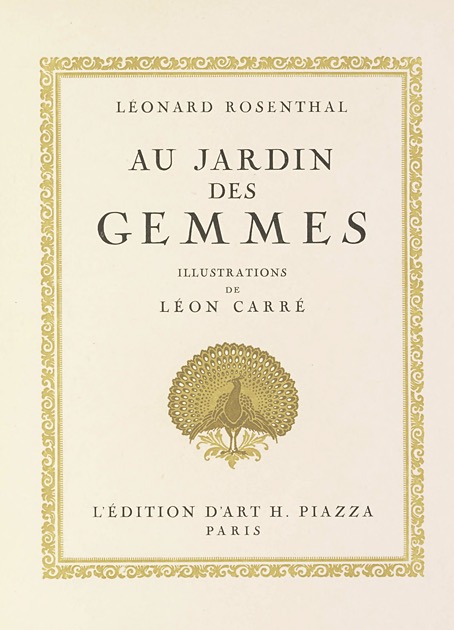
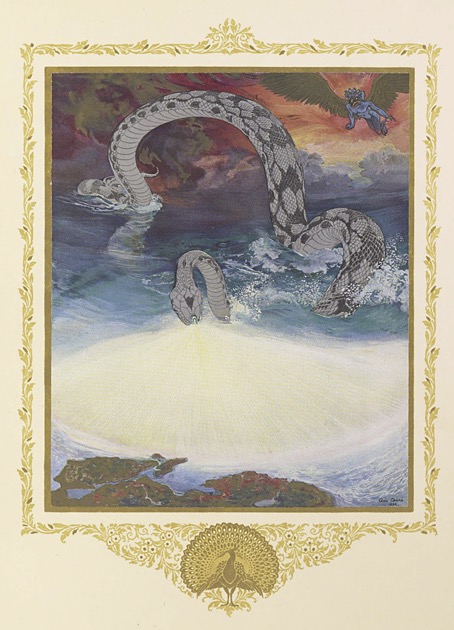
Léon Carré’s In the Garden of Gems

carre01.jpg

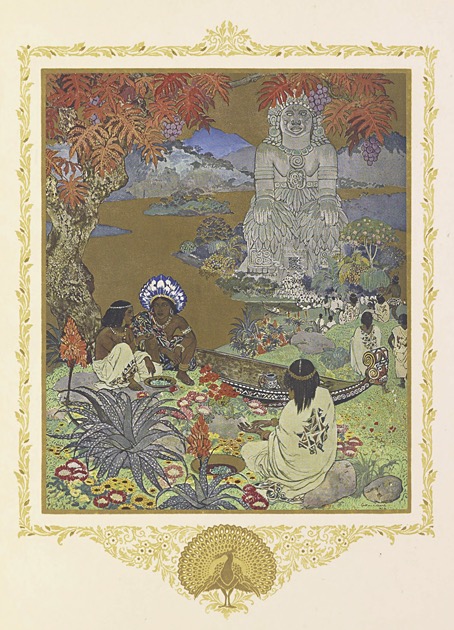
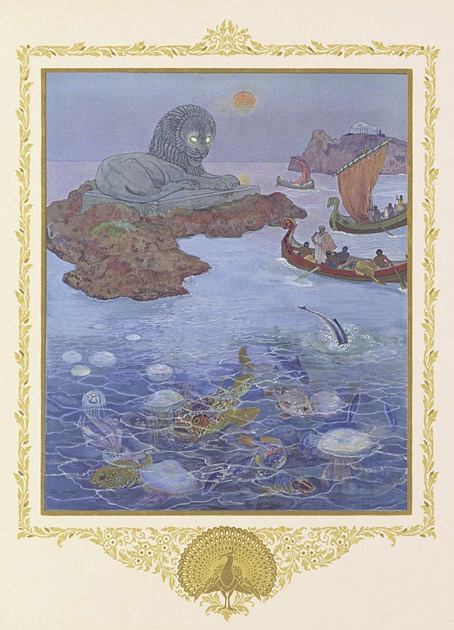
Léonard Rosenthal’s follow-up to In the Kingdom of the Pearl was this volume with illustrations by Léon Carré. In the Garden of Gems was published in 1924 in an edition that matches the earlier book for page layout, print quality and decoration. The illustrator, Léon Carré (1878–1942), was more of a painter than a book illustrator, being one of the many Orientalist artists that France produced in the 19th century. Given the quality of his illustrations it’s a shame he didn’t work on more books, although there was a French edition of the Thousand and One Nights that he illustrated a few years later.

carre02.jpg

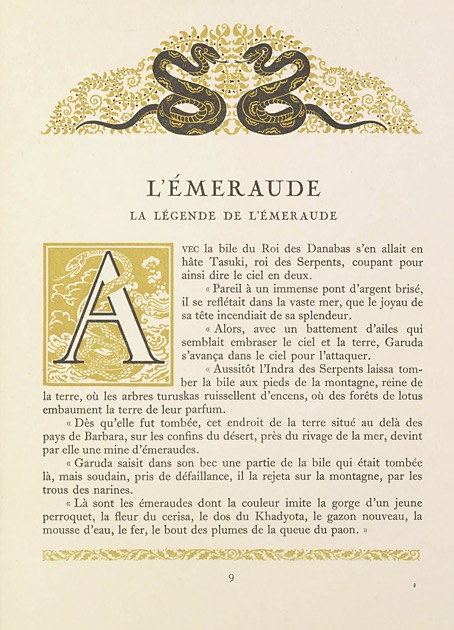
Rosenthal’s note to the reader describes his own book as “the study of the passionate, obstinate, cruel, and sometimes tragic struggle waged by humankind to conquer precious stones, the examination of beliefs, allegories, legends, and symbolisms…”. Individual chapters are devoted to the history of the emerald, ruby and sapphire. As with the earlier book, each chapter is embellished with a decorative header and drop cap whose details change according to the subject. This peacock obsessive approves of the profusion of pavonine motifs.

carre03.jpg

carre04.jpg

carre05.jpg

Continue reading “Léon Carré’s In the Garden of Gems”