Steal Me

stealme.jpg

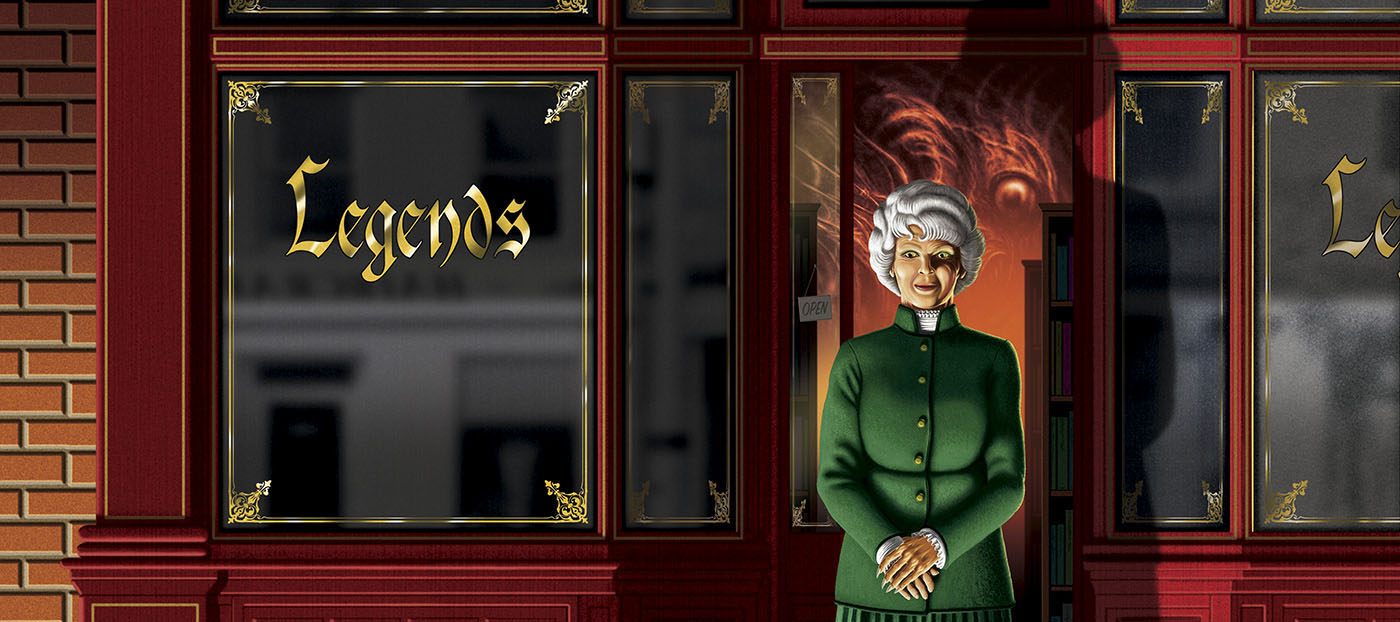
Coming soon from Absinthe Books, the novella imprint of PS Publishing, is Steal Me by Helen Grant, a book for which I created the wraparound cover art:

Rowan Byrne hasn’t stolen anything for ages—not since she started to straighten her life out after a personal tragedy. But the volume she’s just picked up in the new bookshop in town seems to want her to steal it. The text is very persuasive. There’s a book for everyone in Legends—a book that will encourage their worst impulses. Steal. Fear. Burn. Kill. It’s not long before Rowan’s small town, isolated from the outside world, is descending into mayhem. Assailed by her own demons, Rowan could try to cut and run. Or she could make a stand, and try to save the community she loves…

stealme2.jpg

This was a good book to work on. I’d not worked for PS for a while, and very much enjoyed Helen’s collection of stories for Swan River Press, Atmospheric Disturbances, whose cover and boards I also designed. “Legends”, the mysterious shop with the darkened windows, is staffed by a pair of elderly women who seem vaguely unreal—pleasant and helpful but not quite human, and with an undefined aura of menace. By coincidence, the previous book I worked on for PS Publishing was a fully illustrated edition of Needful Things by Stephen King, a much longer novel about a mysterious shop in a small town whose sinister/unreal proprietor and wares cause mayhem among the populace. Helen says she wasn’t imitating the King novel, and the similarities are superficial in any case. I feel she did more with the concept, and with greater economy, than the world’s most popular horror novelist (and I say this after the world’s most popular horror novelist sent his compliments for my work on his book); but then I’ve never been keen on the tendency favoured by King and others to fill out hundreds of pages with background detail and character biographies at the expense of the horror. In the past I’ve thrown the occasional barb at Mies van der Rohe’s overused quote, but sometimes less really does mean more.

Steal Me will be published in June. Don’t steal it.

Previously on { feuilleton }
Atmospheric Disturbances
The Needful Thing
All the Things
Needful Things

The Black Goat

blackgoat.jpg

I found time recently to finish another picture for the revised edition of my Lovecraft book, a picture which I almost completed several months ago then had to set aside. Last year’s steady progress on the book’s production was brought to a halt in December as a result of a substantial and time-consuming illustration commission. I can’t complain—the new work was welcome after a rather fallow year—but it left me with none of the spare time I usually try and allot to personal projects.

The latest piece is yet another addition to the Great Old Ones section, a collaboration with Alan Moore for which Alan wrote a series of short text pieces that mapped Lovecraftian gods and locations across the spheres of the Kabbalah. If you’ve heard of Shub-Niggurath then you’ll doubtless know the additional title given to the entity: “The Black Goat of the Woods with a Thousand Young”. For the Kabbalistic scheme Alan identified Shub-Niggurath with Binah, the third sphere on the Tree of Life which represents the point at which the descent of energies from the higher spheres to the lower are infused with female qualities. In Kabbalistic terms the assignation works well, Binah being a sphere where gravid entities are preparing to give birth. For the artist, Shub-Niggurath is another Lovecraftian god that’s little more than a suggestive name; the “Black Goat” is never described in Lovecraft’s own writings, and we never learn what the “Thousand Young” may be. This gives considerable latitude to an illustrator, although most of the depictions tend to incorporate goatish features of some kind. I remain undecided about this. On the one hand the creation of a goat god is a rare example of Lovecraft carrying over attributes from pagan iconography into the unearthly realm of the Great Old Ones; Pan is the obvious forerunner here even though Pan was a male deity. On the other hand there’s the question of the degree to which we should acknowledge any physical goatishness when—as with Tsathoggua and Cthulhu—the resemblance to a terrestrial organism may be a result of a mind at the end of its tether straining for a visual description: “It looked like a…goat/toad/squid-faced dragon…!”

sephiroth.jpg

The Sephiroth chart from the second edition of the book, 2006.

As I say, I’m undecided but for this piece I opted for a compromise, a goat-like head supported by a monstrous body presiding over an even more monstrous progeny. My earlier depiction was another Photoshop melange, something that looked novel in 1999 but wouldn’t pass muster today. The new version is a further evolution of a form of digital drawing I’ve been developing, a process in which you draw a portion of the picture then copy and paste it to a new layer, distort it slightly using one of Photoshop’s Distort filters, then draw over and around the new section until it blends seamlessly with the rest. This has the effect of creating unpredictable forms that underly the work as a whole, rather like the Surrealist techniques of frottage, grattage, decalcomania and so on. The Surrealist processes were all the product of physical materials but the impulse is the same whatever technique you may use: the introduction of a random element that might evade the conscious input of the artist and the habitual strokes made by the drawing hand.

This leaves me now with one last god-form to be reworked, Yig the serpent deity. I’ve no idea at the moment what to do for this but something will emerge once I start playing around. I’ll also be chipping away at the new pages for The Dunwich Horror. Progress on this has been slower than I hoped but I’m still determined to finish the story. Stay tuned for further updates.

Elsewhere on { feuilleton }
The Lovecraft archive

Previously on { feuilleton }
Tsathoggua rising
H.P.L.
The return of the Crawling Chaos
Lettering Lovecraft
Weird ekphrasis and the Dunwich Horrors
Kadath and Yog-Sothoth
Another view over Yuggoth
Nyarlathotep: the Crawling Chaos

Weekend links 831

blackhole.jpg

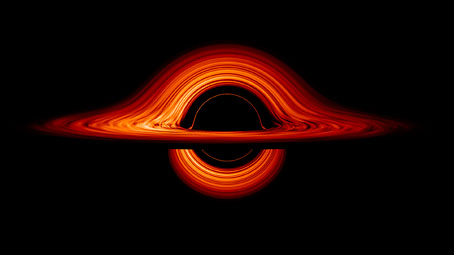
Black Hole Accretion Disk Visualization by NASA’s Goddard Space Flight Center/Jeremy Schnittman.

• The summer catalogue of lots for the After Dark: Gay Art and Culture online auction. Homoerotic art, photos, historic porn, etc.

• New music: The Sanctity Of Rust by Hollan Holmes; Heavy Water by Magic Tuber Stringband; Sorry I Didn’t Realize by iNFO.

• In another of those foolhardy numbered lists, Alexis Petridis attempts to rank Laurie Anderson’s greatest songs.

“The best of mathematics is a way of thinking,” [Klainerman] said. Progress in the field is made through discoveries rather than inventions, by following its own version of the scientific method. In 1911, for example, Roald Amundsen and four fellow explorers were the first people to reach the South Pole. “The South Pole was there to be discovered,” Klainerman noted, “but the path you take to get there, and the equipment you bring, depends on human inventiveness.” When he and Christodoulou spent six and a half years proving that Minkowski space is stable, they too had to invent the tools to get there. But the stability itself was not their creation. It was a fact to be divined.

A long read by Steve Nadis on Sergiu Klainerman and his conviction that mathematics has an existence that precedes human thought

• At the BFI: Tony Rayns on Lino Brocka’s Macho Dancer (1988), a trip into Manila’s gay underworld.

• Read an extract from In Another World: The Four Seasons Of Talk Talk by Graeme Thomson.

• At The Daily Heller: The Serene Surrealism of Guy Billout.

• At Dennis Cooper’s it’s a Malcolm Le Grice Weekend.

Mathematics And Electronics (1995) by Gas | True Mathematics (2002) by Ladytron | Music Is Math (2002) by Boards Of Canada

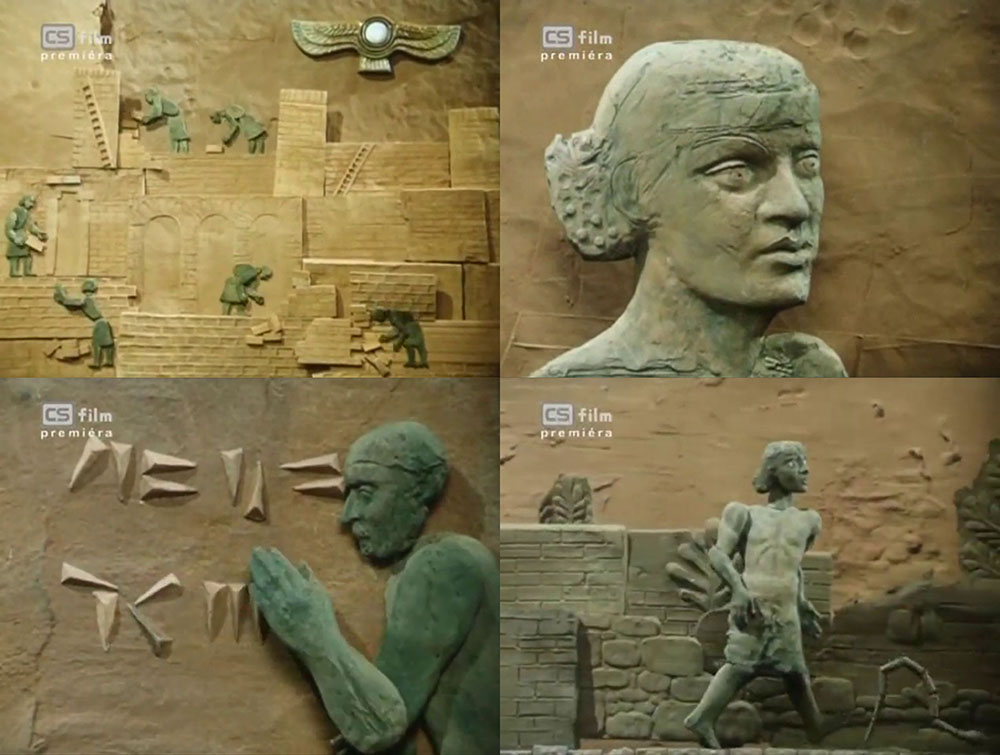
Gilgamesh, a film by Pavel Aujezdský

gilgamesh1.jpg

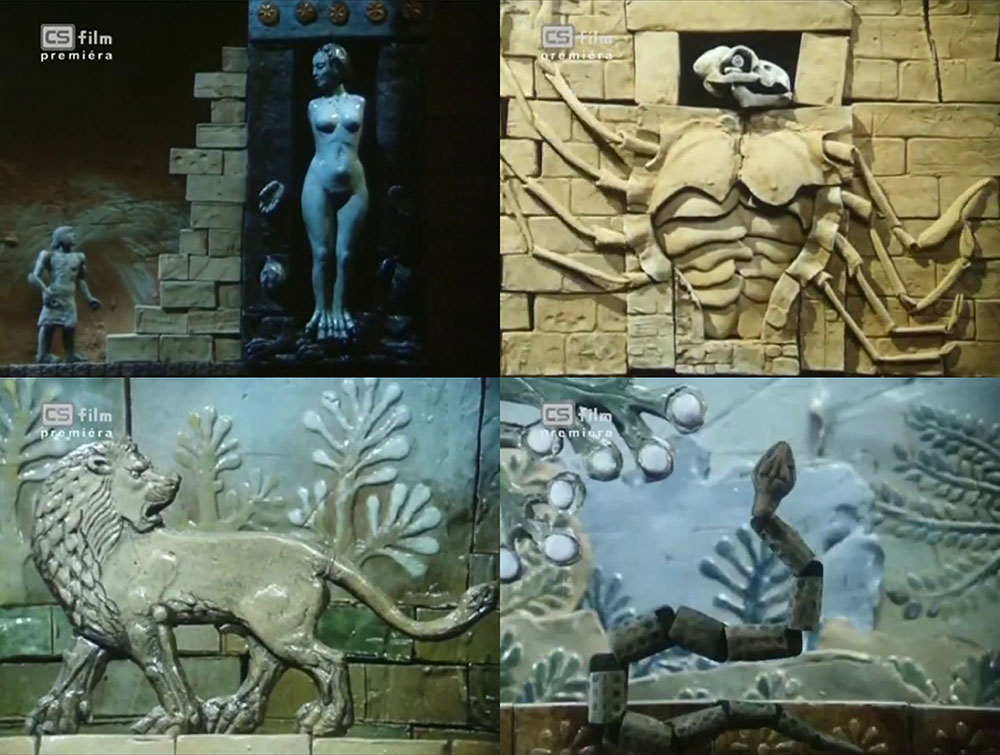
The Epic of Gilgamesh isn’t a natural choice for the subject of a short animated film, but that’s what we have here, the first directorial effort by Czech film-maker and TV director Pavel Aujezdský. I’ve never read the Sumerian saga so I’m in no position to judge the success of Aujezdský’s adaptation, but given the strange and confusing nature of the opening scenes I’d guess it helps to be acquainted with the story. The scenes that follow are more straightforward, depicting a journey by the hero in which various powerful beings have to be confronted and either evaded or defeated.

gilgamesh2.jpg

This is one of those animated tales where the form emulates the content to some extent, in this case presenting the deeds of Gilgamesh in the manner of the tableaux found on Sumerian stone carvings. It wasn’t the first animated short based on The Epic of Gilgamesh. The Quay Brothers made This Unnameable Little Broom in 1985, two years before Aujezdský’s film, although in the Quays’ case they only dramatised a single incident from the saga. You’ll find that one on their DVD/blu-ray collections.

Icarus Descending

tmwfte02.jpg

UK, 2009.

Newton leaned forward, putting his elbows carefully on the table. “Nathan. Nathan. I was afraid of you then. I am afraid now. I have been afraid of all manner of things every moment I have spent on this planet, on this monstrous, beautiful, terrifying planet with all its strange creatures and its abundant water, and all of its human people. I am afraid now. I will be afraid to die here.”

Before my recent rewatch of The Man Who Fell to Earth I decided to read the novel in order to spice up yet another viewing by comparing the film with its source. And as is often the case when reading books of a certain vintage, curiosity had me wondering how the book has been cover-designed over the years.

The Man Who Fell to Earth was published in 1963. Prior to this Walter Tevis had only published one other book, The Hustler, his first novel about pool-player “Fast Eddie” Felson. Such a debut wouldn’t have marked Tevis as a putative writer of science fiction although he had written a handful of stories for SF magazines before attempting anything at novel length. The Man Who Fell to Earth is artistically satisfying science fiction, and a good novel in a literary sense, something you can’t always expect from those writers of Tevis’s generation who seemed to read nothing but technical reports and fiction by other SF writers.

The story opens in 1985, presenting a future which isn’t too different to the 1985 that many of us lived through. Speculation is minor and mostly relegated to the background, with occasional mentions of monorails, food shortages and warring African nations who threaten each other with nuclear weapons. Into this world there arrives the alien who calls himself Thomas Jerome Newton (we never learn his original name), a clandestine emissary from the dying planet his people know as Anthea. Newton has been sent to Earth with plans to build a financial empire using his advanced technical knowledge. This will, he hopes, enable him to build a craft in order to ferry the remaining Antheans to a world where they can survive. Once they’re secure, the Antheans also plan to rescue the inhabitants of Earth from imminent nuclear destruction.
tmwfte22.jpg

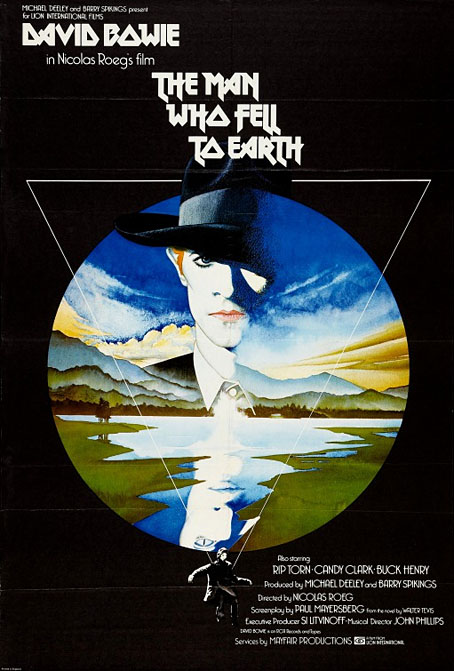
The US one-sheet of Vic Fair’s poster. After decades of illustrators and designers working with both the book and the film, Fair’s poster is still the most successful condensation of the story into a single, memorable image.

If you’ve seen the film then the broad strokes are all very familiar. Nicolas Roeg’s direction and Paul Mayersberg’s script treat the material elliptically but the film stays closer to the novel than you might expect, with Mayersberg even reusing some of Tevis’s dialogue. Both novel and film are very much concerned with portraying the Earth itself as an alien planet. For the first half of the novel, “1985: Icarus Descending”, we see our world through Newton’s eyes while he makes his way among the clever but dangerous primates. The second half, “1988: Rumpelstiltskin”, concentrates equally on Newton’s attempts to retain his sanity in a world that must never discover his real intentions or his true nature; and on the curiosity of Nathan Bryce, the chemist helping to construct Newton’s spacecraft, whose suspicions about his employer are eventually confirmed. Bryce believes that Anthea must be the planet Mars, but when asked about this directly Newton simply replies “Does it matter?”

Roeg and Mayersberg’s film received mixed reviews in 1976 but its cult status has grown thanks to its connection with David Bowie’s person and career. Bowie’s Newton has become a dominant motif for book covers even though Tevis’s Newton is a negative inversion of the screen alien, being six-and-a-half feet tall, with tanned skin and pure white hair. For art directors and illustrators the challenge since 1976 has been to present the novel in a manner which does more than merely repeat the imagery of the film. Not everyone succeeds in doing so.
tmwfte12.jpg

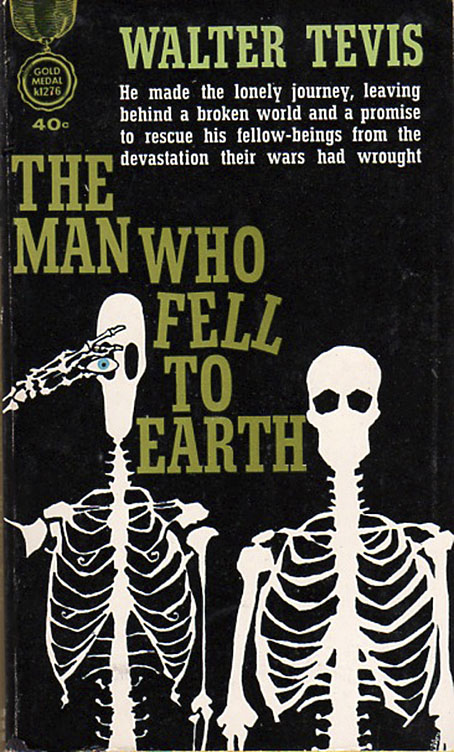
USA, 1963. Cover art by Leo and Diane Dillon.

The first printing was as a paperback original with untypical cover art by Leo & Diane Dillon. Without reading the novel it’s hard to tell what this is about at first glance, but the figure on the left is supposed to represent Newton’s unusual lightweight skeleton whose height and shape are contrasted with its human counterpart. The eye presumably refers to the contact lenses that Newton wears to disguise his cat-like pupils.
tmwfte07.jpg

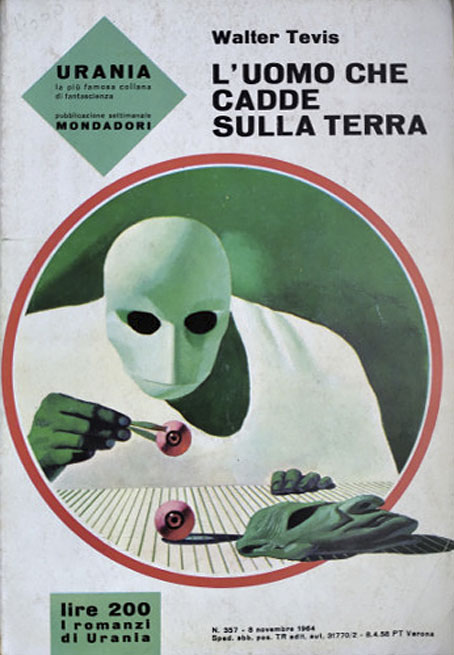
Italy, 1964. Cover art by Karel Thole.

The few covers that pre-date the film are what you might call the innocent ones, free of David Bowie’s face or Bowie-like figures. Here the prolific Karel Thole also favours Newton’s diguises over any other imagery.
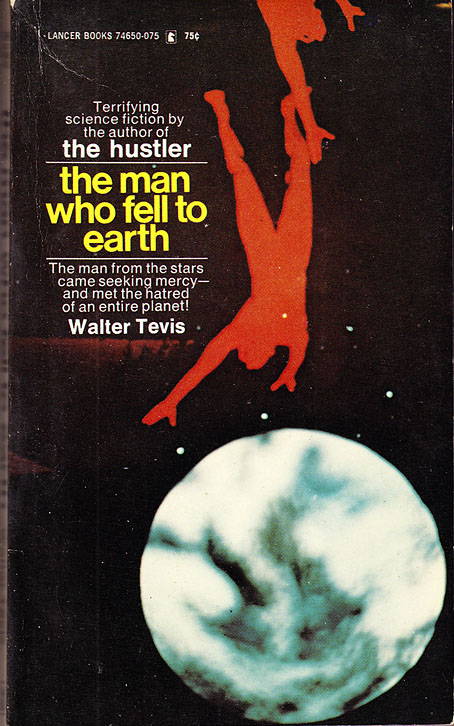
tmwfte03.jpg

USA, 1970. Cover art by Howard Winters.

Continue reading “Icarus Descending”